


Hidrocarburos

Capacitando a las autoridades para controlar la cadena de suministro de combustibles
Para garantizar la integridad del combustible, es necesario identificarlo y controlarlo debidamente. Incluso pequeñas cantidades de componentes no regulados en su composición pueden acarrear graves consecuencias técnicas, económicas y medioambientales. Los combustibles de baja calidad dañan los motores, aumentan los costes de funcionamiento y agravan los riesgos para la seguridad y el medio ambiente.
En este contexto, SICPA ha desarrollado una gama de marcadores de combustible que permiten a las autoridades controlar la calidad de los combustibles en los depósitos y las estaciones de servicio.
Estos sistemas de marcado ayudan a garantizar que el combustible sea seguro, cumpla con la normativa vigente y reduzca su impacto en el medio ambiente y en la salud de los ciudadanos.

SICPA Fuel Integrity Solution (FIS): Solución de integridad de combustibles de SICPA en apoyo a la protección medioambiental mediante la prevención del uso de combustibles de baja calidad
Los marcadores de combustibles de SICPA promueven la integridad de los combustibles y las prácticas comerciales legales, ya que permiten a las autoridades detectar desvíos ilícitos, adulteraciones y mezclas ilegales a lo largo de toda la cadena de suministro de combustibles. Los marcadores moleculares están concebidos para añadirse en niveles de traza, lo que permite realizar controles cualitativos y cuantitativos, así como obtener pruebas con validez forense. Su diseño asegura que no afecten al rendimiento de los combustibles ni supongan un riesgo para las personas o el medio ambiente durante la combustión.
SICPA gestiona estos productos de conformidad con los marcos normativos aplicables y las obligaciones en materia de gestión responsable de los productos:
- Registro REACH de la UE (Reglamento (CE) n.º 1907/2006 del Parlamento Europeo y del Consejo, de 18 de diciembre de 2006) tras la realización de ensayos fisicoquímicos, toxicológicos y ecotoxicológicos por parte de laboratorios reconocidos e independientes.
- Cumplimiento de los requisitos de notificación en Suiza.
- Adaptación a la normativa local en los países donde se implementa la FIS.
Este enfoque se basa en datos fisicoquímicos, toxicológicos y ecotoxicológicos exhaustivos. Las consideraciones relativas a la salud laboral y el medio ambiente se abordan mediante la clasificación de peligros, la evaluación de riesgos, las directrices para una manipulación segura por parte de usuarios profesionales y la evaluación del ciclo de vida de los posibles impactos ambientales. Los ensayos independientes realizados en condiciones reales confirman que el marcado de los combustibles no incrementa las emisiones reguladas de contaminantes orgánicos persistentes (COP) en comparación con los combustibles no marcados.
La presencia de azufre en los combustibles es un factor clave de la contaminación atmosférica, ya que tiene efectos nocivos directos sobre la salud de las personas y degrada e inutiliza las tecnologías de control de emisiones de los vehículos. Mientras los niveles de azufre se mantengan elevados, las medidas para mejorar la calidad del aire, como la modernización del parque automovilístico, serán menos eficaces. La tecnología FIS de SICPA es la única solución del mercado que permite, mediante una única prueba in situ y en menos de cinco minutos, verificar simultáneamente el cumplimiento fiscal del combustible (nivel de marcador) y su calidad (contenido en azufre).

Protección de la integridad del combustible y de los ingresos públicos
En la lucha contra la adulteración, el contrabando y otras actividades ilícitas relacionadas con el combustible, SICPA aporta una solución contrastada que permite recuperar ingresos fiscales, proteger la calidad del producto y preservar la integridad de la cadena de suministro.
Gracias al uso de tecnologías de marcado de gran fiabilidad integradas en una plataforma de supervisión de datos, los gobiernos y las empresas petroleras pueden realizar un seguimiento y una supervisión exhaustivos de la distribución de hidrocarburos. Esto facilita la aplicación de la ley y el desarrollo de políticas encaminadas a fomentar una economía legítima en la que participe la ciudadanía.

Los análisis se han llevado a cabo en entidades y laboratorios acreditados según la norma ISO 17025 y en consonancia con el Convenio de Estocolmo

La Agencia Europea de Sustancias y Mezclas Químicas (ECHA) actúa como autoridad de referencia en la Unión Europea en materia de seguridad química. Gracias a marcos como REACH y CLP, se garantiza que los riesgos químicos se identifican, se evalúan y se gestionan basándose en pruebas científicas, lo que refuerza la confianza en el uso seguro de las sustancias. Al establecer criterios exigentes en materia de evaluación de peligros, gestión de riesgos y comunicación en la cadena de suministro, la ECHA se ha labrado una reputación mundial como organismo regulador de referencia, lo que genera confianza en que las sustancias químicas comercializadas pueden utilizarse de forma segura, al tiempo que fomenta la innovación, la sostenibilidad y la confianza de los ciudadanos.

Eurofins Scientific, líder mundial en la detección de dioxinas y contaminantes orgánicos persistentes, analiza más de 15.000 muestras de dioxinas al año. El Centro de Competencia de Eurofins sobre dioxinas y COP llevó a cabo evaluaciones independientes de los marcadores de combustible de SICPA para valorar su seguridad para el medio ambiente y la salud pública. Se midieron las emisiones de dibenzo-p-dioxinas policloradas y dibenzofuranos policlorados (PCDD/PCDF), bifenilos policlorados (PCB), dibenzo-p-dioxinas polibromadas y dibenzofuranos polibromados (PBDD/PBDF) y bifenilos polibromados (PBB) en el combustible marcado y no marcado. Los resultados confirman que los marcadores FIS de SICPA son inocuos para el medio ambiente y la salud pública, y que cumplen con todas las normas reguladoras internacionales.

SOCOTEC es líder mundial en servicios de ensayo, inspección y certificación (TIC), y colabora con gobiernos e industrias en la evaluación de la seguridad, el rendimiento medioambiental y el cumplimiento normativo. En el marco de la gestión responsable de productos y de la diligencia debida medioambiental de SICPA, se encargó a SOCOTEC, con sede en Mánchester y acreditada según las normas ISO/IEC 17025 y MCerts por UKAS, la realización de ensayos independientes de emisiones para analizar todos los compuestos de interés. Las pruebas independientes confirmaron que el marcado de combustibles puede implementarse sin que ello suponga un aumento de las emisiones reguladas de COP ni de otros contaminantes controlados, en comparación con los combustibles sin marcar. Esto proporciona una garantía científica adicional de que la FIS de SICPA no daña el medio ambiente.

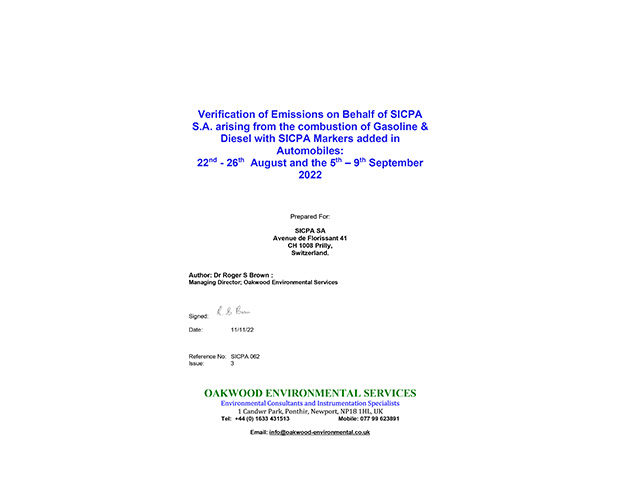
La campaña de pruebas con marcadores de SICPA se llevó a cabo bajo la supervisión del Dr. Roger S. Brown, científico de prestigio internacional especializado en calidad del aire, presidente de la Source Testing Association del Reino Unido y miembro de la Real Sociedad de Química (FRSC). La Source Testing Association (STA) cuenta con más de tres décadas de liderazgo y dedicación sin igual en el ámbito del control de emisiones. En los últimos 30 años, la STA ha contribuido significativamente a perfeccionar y establecer normas del sector que han mejorado la precisión, la fiabilidad y la seguridad de las prácticas de control de emisiones. Su defensa de las mejores prácticas y el desarrollo profesional ha permitido a sus miembros adquirir los conocimientos y las habilidades necesarios para destacar en un campo en constante evolución. Las aportaciones del Dr. Roger S. Brown respaldan la conclusión de que la FIS no provoca aumentos cuantificables de los contaminantes atmosféricos regulados ni de los contaminantes orgánicos persistentes en comparación con los combustibles sin marcar. Esto demuestra claramente que los marcadores de combustible de SICPA pueden utilizarse sin comprometer la calidad del aire, los objetivos de protección del medio ambiente ni las medidas de protección de la salud pública.

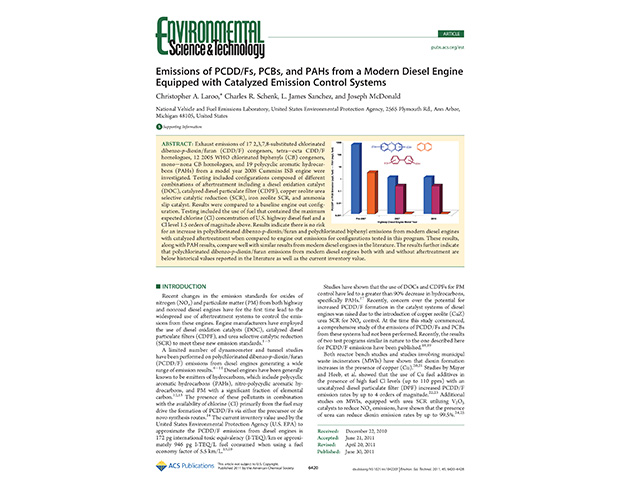
La Agencia de Protección Ambiental de los Estados Unidos (EPA) ha llevado a cabo estudios similares sobre las emisiones de COP derivadas de la presencia de compuestos halogenados en los combustibles, cuyos resultados se han publicado en revistas científicas con revisión por pares.
«Las pruebas incluyeron la utilización de combustible con la concentración máxima prevista de cloro (Cl) en el gasóleo para autopistas de EE. UU., así como un nivel de Cl 1,5 órdenes de magnitud superior (10 ppm). Los resultados indican que no existe riesgo de que aumenten las emisiones de dibenzo-p-dioxinas y furanos policlorados, ni de bifenilos policlorados procedentes de los motores diésel modernos con postratamiento catalítico, en comparación con las emisiones directas del motor en las configuraciones analizadas en este programa.» (Environ. Sci. Technol. 2011, 45, 6420–6428)
Estudios independientes de la Agencia de Protección Ambiental de Estados Unidos (EPA) alcanzan conclusiones similares, lo que refuerza la solidez de los resultados obtenidos.
Informes – Inicio:
Oakwood Environmental Services

Oakwood Environmental Services
Environmental Service & Technology

Desafíos y necesidades

Resumen de nuestras soluciones

Ventajas de la solución de integridad del combustible

Estudios de caso
FAQ
La Solución de Integridad del Combustible de SICPA combina el marcado molecular del combustible, la inspección en el terreno y la supervisión de datos para proteger las cadenas de suministro de combustible del sector downstream frente a la evasión fiscal.
Mediante la introducción de marcadores moleculares inalterables en determinados tipos de combustible, las autoridades pueden realizar pruebas rápidas en el terreno para detectar de inmediato actividades sospechosas, luchar contra el contrabando y la adulteración de combustible, y reforzar la supervisión de la cadena de suministro.
El marcado forense de combustibles proporciona prueba inequívoca de la identidad del producto y respalda el monitoreo del cumplimiento en toda la red de distribución, ayudando a las autoridades a verificar la conformidad e identificar posibles desvíos de combustible subsidiado.
Una Solución de Integridad del Combustible nacional protege la recaudación pública, defiende a los consumidores contra combustibles fuera de especificación, minimiza el impacto ambiental y potencia la transparencia en todo el sector de downstream de petróleo.