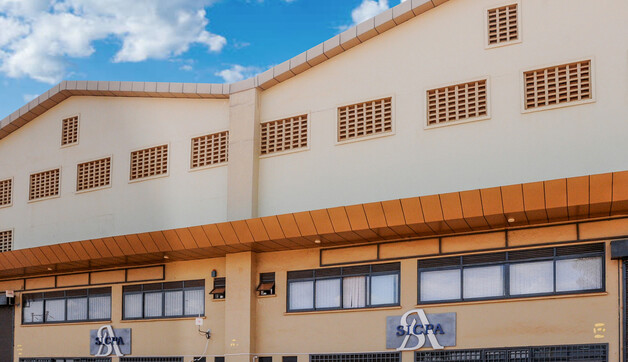
SICPA in Africa
SICPA serves nations and enables them to foster a fairer and more transparent business environment as well as a fertile ground for investment in public resources.
- From excisable goods, hydrocarbon, to products subject to conformity standards, our Revenue Mobilisation & Conformity and Natural Ressources solutions help governments in Africa address illicit trade and counterfeiting, drive compliance and ensure consumer security, whilst boosting tax revenue streams. SICPA is also known for safeguarding the majority of the world's banknotes.
- It is on the African continent that we employ the most staff outside Switzerland, with more than 1,000 employees, more than a third of our Group's total workforce.
- Our solutions have been successfully deployed in several countries in Africa.
- We have established a Centre of Excellence in Africa, based in Morocco, to meet the specific needs of the continent.
News
SICPA's solutions are regularly cited in the media in Africa for their efficiency and benefits to public authorities, industry and citizens alike.

Read the latest articles:
- The Standard, 28 April 2026
Kenya: How fuel marking technology protects public health and regional energy security > Read more
- New Vision, 22 April 2026
Uganda: How fuel marking works to protect motorists from adulterated fuel > Read more
- Commission chargée du marquage des produits, 26 March 2026
Digital market intelligence (DMI) : Le Président ADOYI sur le plateau de la télévision togolaise > Read more
- National Revenue Authority, 26 March 2026
NRA and SICPA conduct technical site visits at leading cement manufacturers to strengthen tax compliance > Read more
- Financial Afrik, 20 March 2026
Interview exclusive de Balam Sosso Tchamdja, directeur général Togo de SICPA > Read more
- Togo First, 13 March 2026
Togo deploys digital intelligence platform to combat market fraud > Read more
- douanes.ci, 10 March 2026
Côte d'Ivoire: des agents des douanes formés au Système d’identification, de traçabilité et d’authentification des produits du tabac > Read more
- Monitor, 4 Feb 2026
Audit report: Digital systems drive 29 percent growth in customs and excise taxes > Read more
- Monitor, 2 Feb 2026
Ugandan government records 40% surge in revenue collection > Read more
- The Voice Gambia, 8 Jan 2026
Le marquage carburant de GRA renforce la confiance dans le secteur pétrolier gambien > Read more
International institutions credentials
Prominent international institutions such as the International Monetary Fund (IMF), the World Health Organisation (WHO), the World Bank and the African Tax Administration Forum (ATAF) laud SICPA's robust solutions in Africa for their positive impact on eliminating illicit trade and enhancing tax collection.

ATAF Kenya
Read online: ATAF Report - 2023
"In Kenya, the implementation of the Excisable Goods Management system reduced illicit cigarette market from 15% in 2003 to 5% in 2016."
ATAF Morocco, Kenya
Read online: ATAF Report - 2023
"Some countries like Kenya [...] and Morocco have implemented robust production monitoring systems, and track and trace systems that monitor production of excisable goods in the licensed factories. This ensures that they have visibility over production of tobacco products (and other excisable goods) which are produced in their countries."
ATAF Kenya
Read online: ATAF Report - 2016
"Central to the KRA has been the roll-out of excisable goods management system (EGMS). The online EGMS enables the KRA to track and trace stamped and unstamped products the length of the supply chain. It is designed to detect counterfeit goods, prevent smuggling, and to stamp out the falsification of production volumes. The ultimate aim is to improve compliance. Indeed, the KRA states that the EGMS has increased excise tax compliance by 45% in 2014.”
IMF Kenya
Read online: IMF Report - 2018
"In response to the declining revenues from excises in 2013, the Kenya Revenue Authority moved to a new system to strengthen the enforcement of excise duties on all excisable products except motor vehicles. Key to the system was the rollout of the excisable goods management system, which enables the Kenya Revenue Authority to track and trace stamped and unstamped products throughout the supply chain to prevent smuggling and misreporting of volumes. The system also helps in managing stock and inventory and preventing theft of stamps.”
IMF Malawi
Read online: IMF Report - 2025
“In the 2024/25 fiscal year, the authorities accelerated the implementation of revenue-enhancing measures. These efforts yielded a 39.9 percent nominal increase in tax revenue collections compared to the previous fiscal year. Key initiatives included the digitalization of tax administration systems, the introduction of tax stamps, the strengthening of audit and VAT inspection frameworks, and intensified debt recovery efforts.”
IMF Sierra Leone
Read online: IMF Report - 2024
In IMF November 2024 country report N°24/321 on Sierra Leone, the IMF mentions SICPA's product and fuel marking systems for domestic excise collection, as references.
IMF Sierra Leone
Read online: IMF Report - 2024
"NRA has made meaningful progress in the implementation of tax administration reforms, including implementation of product and fuel marking for excise collection."
IMF Tanzania
Read online: IMF Report - 2017
“For Tanzania, the IMF forecasted that the Electronic Tax Stamp system would generate TSH1 + 35.7 billion, equivalent to an additional + 0.03% of GDP2 in its first year of implementation."
IMF The Gambia
Read online: IMF Report - 2023
In the context of the Sixth Review Under the Extended Credit Facility Arrangement, the Gambia country report n°23/2016 of June 2023 mentions the IMF executive director statement for Gambia with the “signature of the public private partnership for the revenue mobilization system for excisable goods, telecom services, and fuel to avoid tax leakages.”
WHO Kenya
Read online: WHO Report - 2015
The EGMS system "enabled the Kenya Revenue Authority to seize more than 300,000 illegal products from about 900 outlets and to prosecute more than 150 offenders between February and June 2014."
WHO Kenya
Read online: WHO Report - 2021
“The system appears to be highly effective because it requires less capacity and is less prone to manipulation than earlier systems. The experience of Kenya shows that a lower-middle-income country can successfully implement a sophisticated system capable of decreasing illicit trade. Illicit trade, as measured by the Kenya Revenue Authority (KRA), was estimated to be around 15% of total consumption in the market during the initial reform period. After the introduction of the new system in 2015, it dropped to 5%. The current, more comprehensive digital system is cheaper than the previous paper tax stamp system."
World Bank Kenya
Read online: World Bank Report - 2019
EGMS "facilitates detection of counterfeit goods, prevents smuggling, and eliminates the falsification of production volumes. The system also reduces the cost of brand protection and aids production monitoring among legitimate business."
Sustainability

As a global company, SICPA seeks to create a positive impact for the local communities where it operates.
We have set 10 environmental, social and governance (ESG) priorities linked to the United Nations sustainable development goals (SDGs) to minimise the environmental, social and economic impact in our strategy and operations. Discover some of our projects in Africa:
Kenya
Tanzania
Uganda
Local offices

DRC, Kinshasa
Gambia, Kanifing Municipality

Kenya, Nairobi
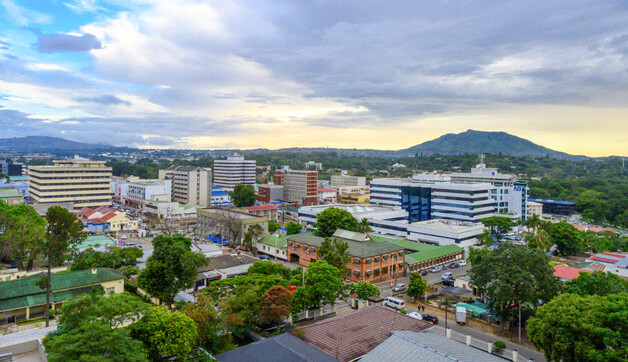
Malawi, Blantyre

Morocco, Casablanca

Sierra Leone, Freetown

Tanzania, Dar es Salaam
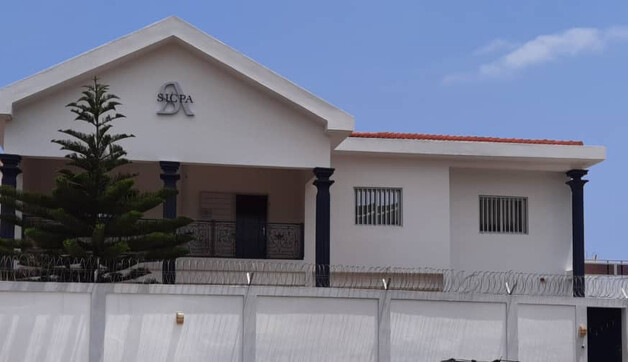
Togo, Lomé